
As I flipped the pancake, the kitchen was filled with the mouthwatering aroma of toasted sesame oil and sautéing vegetables. These Quick and Easy Japanese Cabbage Pancakes, or okonomiyaki, are a delightful twist on typical homemade fare. Packed with nutrition and bursting with a savory flavor, they are the perfect clean-out-the-crisper solution, effortlessly transforming whatever veggies you have on hand into a delicious meal. In just 20 minutes, you can serve up these fluffy delights, whether for breakfast, lunch, or an easy dinner. They’re not only versatile—enjoy them hot, cold, or at room temperature—but a total crowd-pleaser that even the pickiest eaters will love. Curious how to whip up this comforting dish? Let’s dive in!
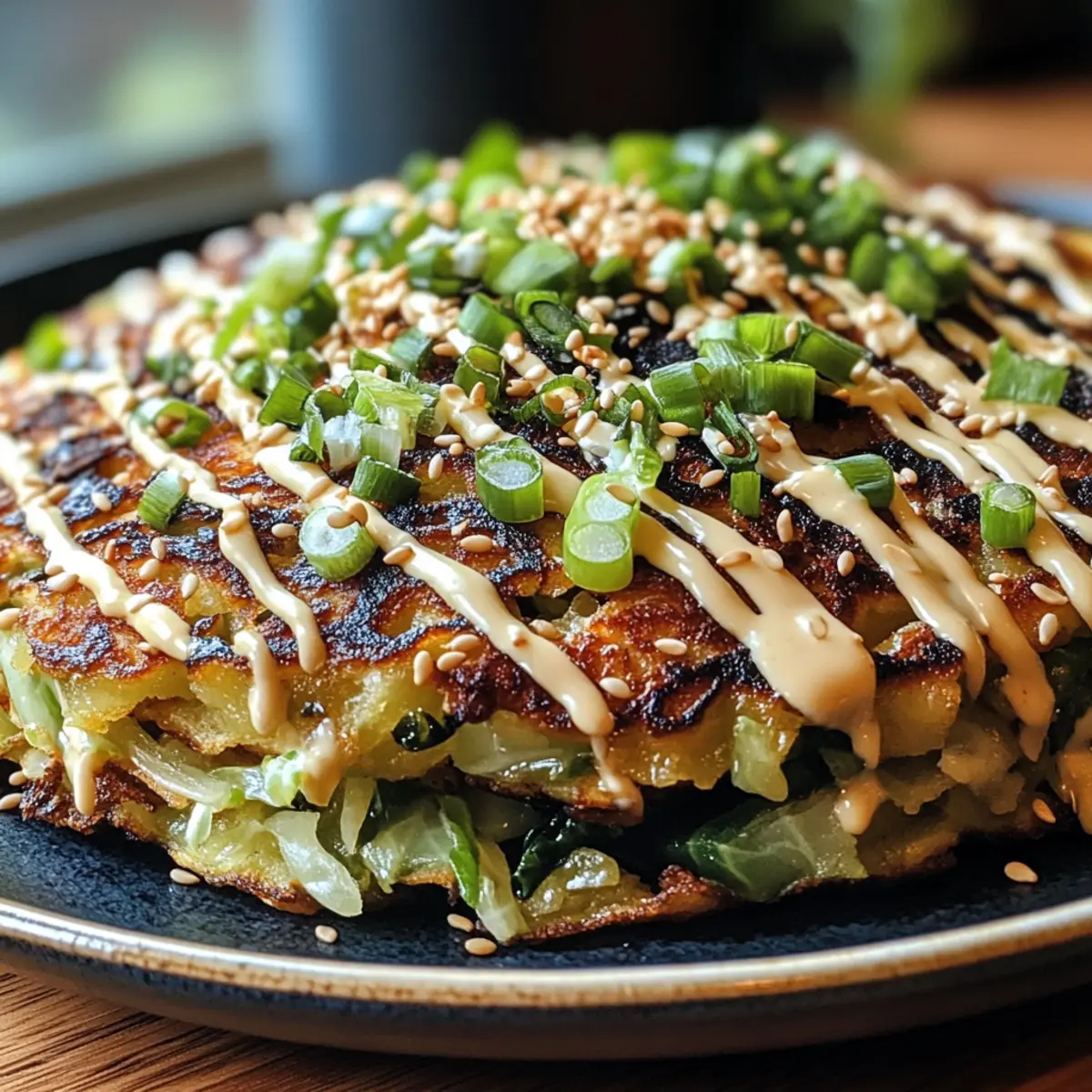
Why are Japanese Cabbage Pancakes irresistible?
Simplicity at its finest: Whipping up these pancakes takes just 20 minutes, perfect for busy days.
Versatility galore: Customize with any veggies you find in your crisper for a unique flavor every time.
Healthy and satisfying: Packed with nutrients and lower in calories, they make for a guilt-free meal option.
Crowd-pleaser appeal: Even picky eaters can’t resist these fluffy delights, ideal for families and gatherings.
Looking for more fun veggie dishes? Check out my delicious Gluten Free Mochi or delightful Japanese Matcha Green cake!
Japanese Cabbage Pancake Ingredients
• Get ready to create your delicious Japanese Cabbage Pancakes with these essential ingredients!
For the Batter
- Cabbage – Finely shredded sweet white cabbage provides structure and nutrition; feel free to substitute with any greens you have on hand.
- Carrot – Adds sweetness and a pop of color; you can grate or finely chop, or even swap with zucchini if needed.
- Onion – Enhances flavor beautifully; yellow onion is best, but scallions or shallots work in a pinch.
- Salt – Enhances flavor while drawing moisture from the vegetables; adjust to taste if using a coarser salt.
- Eggs – Acts as a binder and adds protein; four large eggs are recommended, but substitutes can be tried for different results.
- Light Soy Sauce – Introduces a deep umami flavor; choose low-sodium options for a healthier twist.
- Toasted Sesame Oil – Adds a fragrant touch; substitute with olive oil or any neutral oil if needed.
- All-Purpose Flour – Provides structure to the pancake; opt for gluten-free flour if preferred, adjusting liquid accordingly.
For Frying
- Cooking Oil for Frying – Essential to prevent sticking; a neutral oil like canola or vegetable oil is best.
For Topping
- Japanese Mayonnaise – Traditionally used on top for added richness; regular mayonnaise or yogurt-based dressings work as substitutes.
- Toppings – Enhance flavor with toasted sesame seeds, pickled ginger, sliced scallions, or fresh cilantro for a delightful finish.
Now that you have your ingredients ready, let’s get cooking!
Step‑by‑Step Instructions for Japanese Cabbage Pancake
Step 1: Prepare the Vegetables
In a colander, combine the finely shredded cabbage, grated carrot, and sliced onion. Season with salt, tossing the vegetables gently to coat. Allow them to rest for about 5 minutes. This process draws out excess moisture, ensuring your Japanese cabbage pancake has the right texture and is not soggy when cooked.
Step 2: Make the Batter
In a large mixing bowl, whisk together the eggs, light soy sauce, toasted sesame oil, and all-purpose flour until smooth. The mixture should be well-blended and slightly frothy, indicating it’s ready. This egg mixture acts as the binding agent for your savory Japanese cabbage pancakes, bringing all the flavors together harmoniously.
Step 3: Mix Vegetables into the Batter
After the resting period, use your hands to gently squeeze and drain the excess moisture from the vegetables. Then, fold the drained vegetable mixture into the batter. Ensure every piece of cabbage, carrot, and onion is coated thoroughly; this will add delicious flavor and texture to each bite of your Japanese cabbage pancake.
Step 4: Heat the Skillet
Place a nonstick skillet or well-seasoned cast-iron skillet over medium-high heat. Add about 1-2 tablespoons of cooking oil and heat until shimmering. This step is crucial for achieving that golden-brown crust on your pancakes. You can test if the skillet is ready by splashing a drop of water on it; it should sizzle away.
Step 5: Cook the Pancake
For one large pancake, pour all the batter into the skillet, spreading it evenly. For medium-sized pancakes, divide the batter in half and pour half into the skillet. Cook for approximately 5 minutes or until the edges turn golden and the center is bubbling. This visual cue indicates that it’s time to flip your Japanese cabbage pancake for perfect cooking.
Step 6: Flip and Finish Cooking
Carefully flip the pancake using a spatula, ensuring to cook the other side for an additional 4-5 minutes until it’s golden brown and cooked through. If you’ve opted for smaller pancakes, cook them for about 3-4 minutes on each side until perfectly crispy. Your kitchen should be filled with delicious aromas as the pancakes brown nicely.
Step 7: Rest the Pancakes
Once cooked, remove the pancakes from the skillet and let them rest on a plate for about 1 minute. This brief resting period allows them to firm up slightly, making slicing easier. Your Japanese cabbage pancakes are now beautifully golden and ready to be sliced into wedges for serving.
Step 8: Serve with Toppings
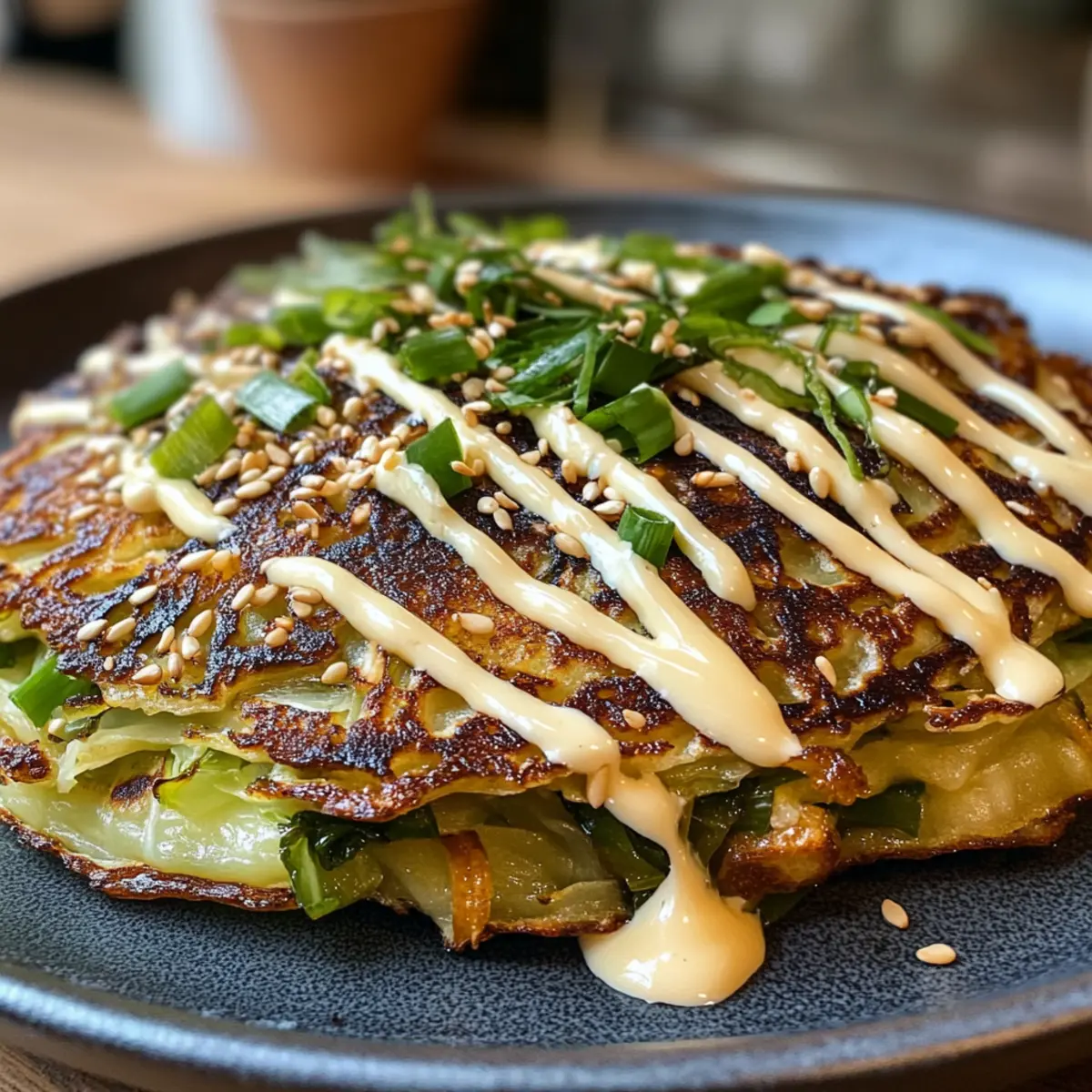
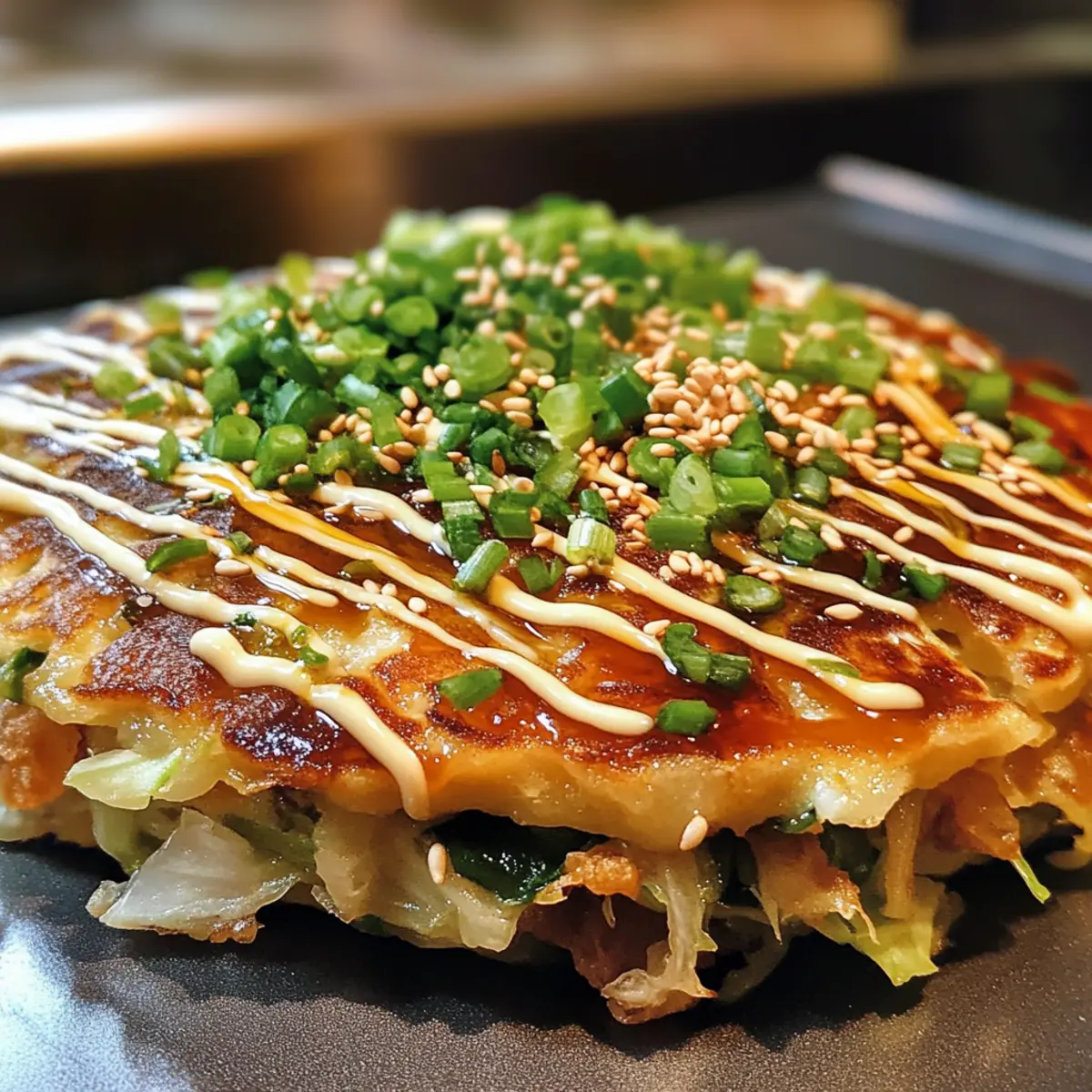
Cut the pancakes into wedges, resembling pizza slices for easy sharing. Drizzle with Japanese mayonnaise and sprinkle your favorite toppings, such as toasted sesame seeds, chopped scallions, or pickled ginger. This final touch adds bursts of flavor, enhancing the delicious taste of your Japanese cabbage pancakes while you enjoy them hot or at room temperature.
Make Ahead Options
These Quick and Easy Japanese Cabbage Pancakes are perfect for meal prep, saving you precious time on busy weeknights! You can prep the shredded cabbage, grated carrot, and sliced onion up to 24 hours in advance. Simply toss the vegetables with salt and store them in an airtight container in the refrigerator to keep them fresh and maintain their crunch. When you’re ready to serve, just mix the prepped veggies into your batter and pan-fry as directed. For a quicker meal, you could also cook these pancakes in batches and refrigerate leftovers for up to 3 days; simply reheat in a skillet or microwave for restaurant-quality results with minimal effort.
Variations & Substitutions for Japanese Cabbage Pancake
Feel free to let your creativity run wild with these delightful twists on your Japanese cabbage pancake, adding your personal touch with each delicious bite!
- Gluten-Free: Use a gluten-free flour blend to keep your pancakes light and fluffy, adjusting the liquid for consistency.
- Dairy-Free: Substitute Japanese mayonnaise with a dairy-free version or even a tahini dressing for a creamy finish.
- Protein Boost: Add cooked shrimp, tofu, or chicken to create a heartier pancake that packs a protein punch.
- Spicy Kick: Mix in Sriracha or red pepper flakes to the batter for those who enjoy a little heat.
- Veggie Variety: Swap in greens like kale or spinach, or bell peppers for a colorful and nutrient-rich addition.
Try adding a handful of fresh cilantro or basil to the veggies for a refreshing herbaceous twist. Each bite will burst with exciting flavors that transform your meal.
For even more creativity, think about using the batter as a base for your own veggie creations! You could explore a delicious pairing with my fluffy Japanese Cotton Cheesecake or sweeten the scene with a lovely slice of Japanese Matcha Green cake for dessert!
How to Store and Freeze Japanese Cabbage Pancakes
Fridge: Refrigerate leftovers in an airtight container for up to 3 days. Make sure they’re completely cooled to maintain optimal freshness.
Freezer: You can freeze Japanese cabbage pancakes for up to 1 month. Place parchment paper between layers to prevent sticking and seal them in a freezer bag.
Reheating: Thaw your pancakes in the refrigerator overnight before reheating. Warm them in a skillet over low heat or in a microwave for 30-60 seconds until heated through for the best texture.
Serving: Enjoy the pancakes either hot or at room temperature, which makes them a versatile addition to any meal!
What to Serve with Quick and Easy Japanese Cabbage Pancakes
Bring your meal to life by pairing these delightful pancakes with harmonious sides and complements that amplify their savory charm.
-
Creamy Misoshiru: A traditional Japanese miso soup provides a warm, umami-rich contrast, accentuating the pancakes beautifully.
-
Fresh Cucumber Salad: Light and refreshing, a crisp cucumber salad dressed in rice vinegar rounds out the dish with a cool bite.
-
Teriyaki Tofu Skewers: For added protein, teriyaki-glazed tofu skewers deliver a sweet-savory flavor, elevating the meal’s overall texture and taste.
-
Steamed Broccoli: Simple yet nutritious, steamed broccoli offers a bright color and a satisfying crunch, enhancing your plate’s visual appeal.
-
Pickled Ginger: This tangy condiment not only adds a refreshing zing but also balances the richness of the pancakes, making every bite delightful.
-
Japanese Beer: Enjoy a light beer like Asahi or Sapporo alongside your pancakes. The crisp fizz complements the dish’s savory essence flawlessly.
-
Sesame Seaweed Salad: This unique salad packs a nutty flavor and chewy texture, creating a pleasing complement to the fluffy pancakes.
-
Fruit Skewers: For a hint of sweetness, fresh fruit skewers with strawberries, pineapple, or melon provide a vibrant contrast, perfect for a light finish.
Expert Tips for Japanese Cabbage Pancakes
• Well-Whipped Eggs: Beat the eggs until frothy to incorporate air, resulting in lighter and fluffier Japanese cabbage pancakes.
• Nonstick Surface: Use a nonstick or well-seasoned skillet to prevent sticking. This ensures easy flipping and evenly cooked pancakes.
• Mind the Heat: Cook on medium heat to avoid burning the outside while leaving the inside undercooked. Patience rewards you with perfectly cooked pancakes!
• Vegetable Prep: Prepping vegetables ahead of time saves you time during cooking. Just ensure they are drained well to avoid sogginess in your pancakes.
• Explore Toppings: Don’t shy away from experimenting with different toppings! Try flavors like Sriracha or cilantro to elevate your Japanese cabbage pancakes even further.
Japanese Cabbage Pancake Recipe FAQs
How do I choose the right cabbage?
Absolutely! For the best results, look for finely shredded sweet white cabbage. It should be crisp and free of dark spots or bruises. If you can’t find it, feel free to substitute it with any greens you have on hand, like napa cabbage or even leafy greens like kale.
What’s the best way to store leftovers?
Very good question! Once your Japanese cabbage pancakes have cooled, place them in an airtight container. They can be refrigerated for up to 3 days. Just be sure they’re completely cool before sealing to keep them fresh and flavorful.
Can I freeze these pancakes?
You sure can! Freezing is a great option to enjoy your Japanese cabbage pancakes later. Lay them flat on a baking sheet, and once frozen, stack them with parchment paper between layers to prevent sticking. Store in a freezer bag for up to 1 month.
What if my pancakes are soggy?
If you find your Japanese cabbage pancakes turning out soggy, it’s likely due to excess moisture from the vegetables. Be sure to toss the shredded veggies with salt and let them sit for about 5 minutes—this draws out extra moisture. Also, squeeze out any liquid before mixing them into the batter.
Are these pancakes safe for my kids?
Absolutely! These pancakes are safe and healthy for children. Just be cautious of any potential allergies to the ingredients, especially eggs or soy sauce. They are a nutritious choice packed with veggies, making them a great family meal.
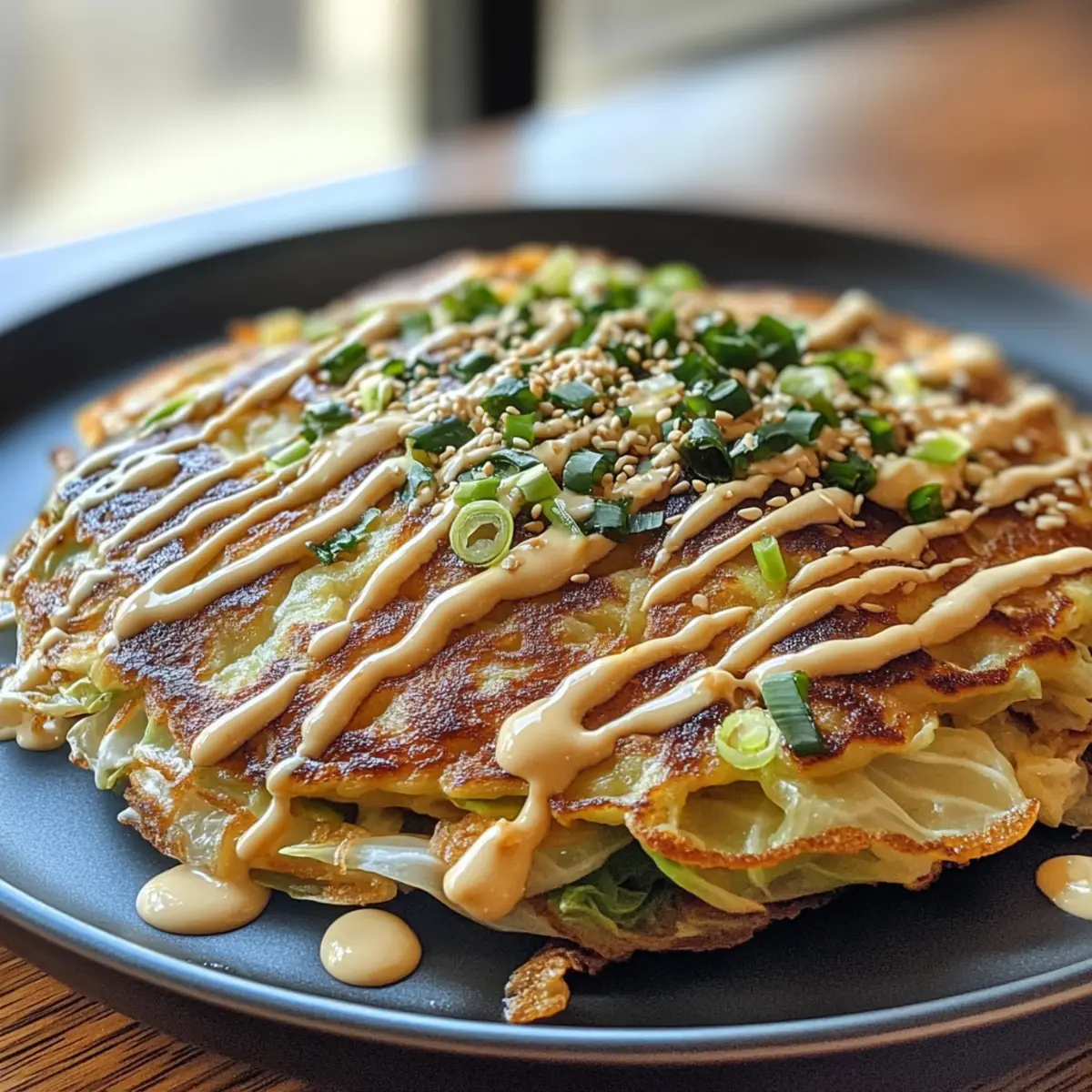
Delicious Japanese Cabbage Pancake: Quick Veggie Delight
Ingredients
Equipment
Method
- In a colander, combine cabbage, carrot, and onion. Season with salt and toss gently. Let rest for 5 minutes to draw out moisture.
- In a large mixing bowl, whisk together eggs, light soy sauce, toasted sesame oil, and all-purpose flour until smooth.
- After resting, squeeze and drain excess moisture from vegetables. Fold into the batter until coated.
- Heat a nonstick skillet over medium-high heat. Add cooking oil and heat until shimmering.
- Pour batter into the skillet, spreading evenly. Cook for about 5 minutes until edges turn golden.
- Flip the pancake using a spatula and cook the other side for 4-5 minutes until golden brown.
- Remove pancakes from skillet and let rest on a plate for 1 minute.
- Cut into wedges and drizzle with Japanese mayonnaise and toppings before serving.
Leave a Reply