
The gentle sound of simmering water filled my kitchen, a reminder of sun-soaked Mediterranean shores. Today, I’m excited to share my recipe for Boiled Octopus, which balances simplicity with a taste of adventure. You won’t believe how easy it is to create tender, flavorful octopus that will transport you right to your favorite seaside taverna. This dish requires just a handful of pantry staples and minimal prep time, making it a stellar choice for anyone looking to elevate their home dining experience. Not only is this boiled octopus an impressive centerpiece for your next gathering, but it also pairs beautifully with salads and pastas, adding a delightful culinary twist. Are you ready to dive into this ocean-inspired dish? Let’s turn up the heat and get cooking!
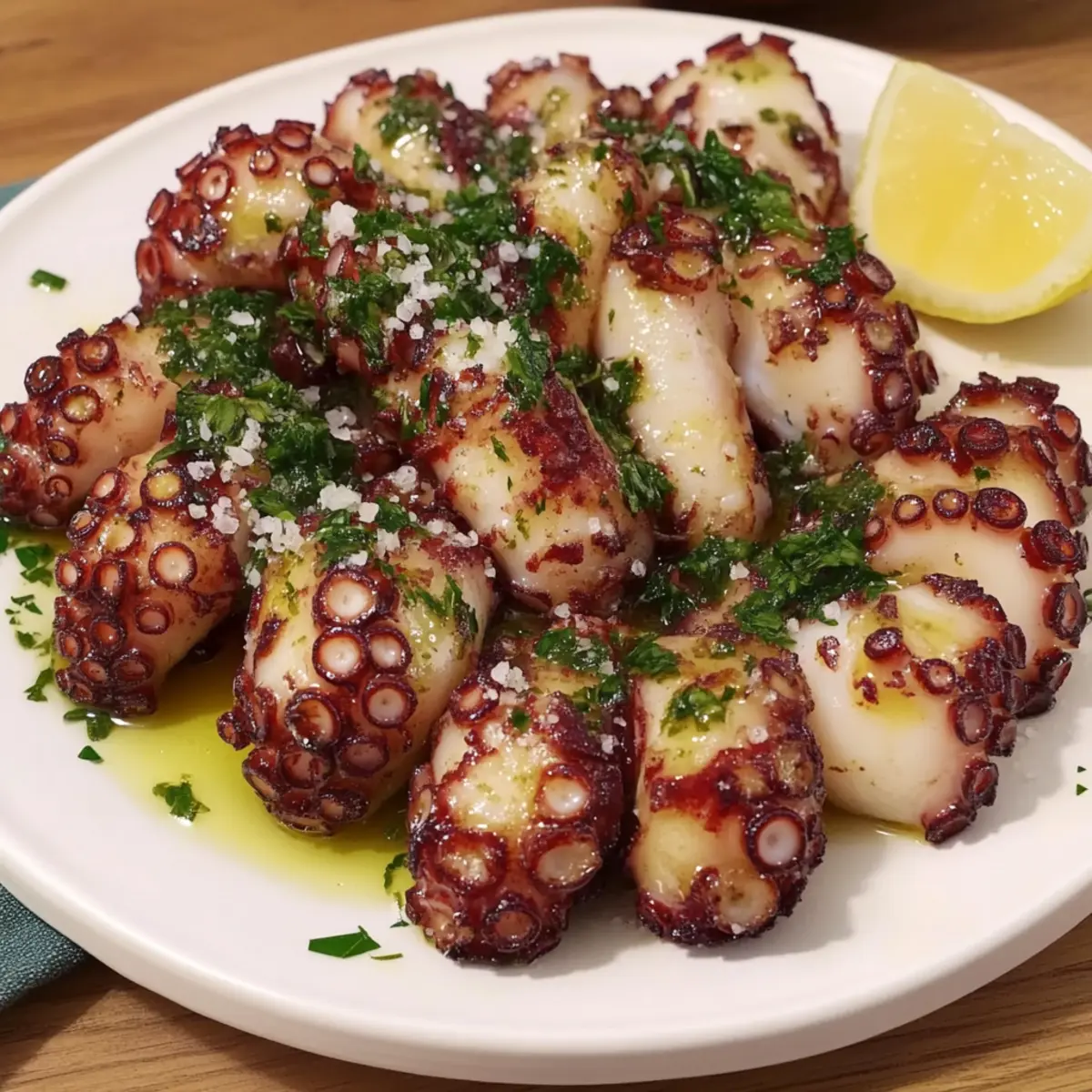
Why is Boiled Octopus a Must-Try?
Simplicity: This recipe boasts easy-to-follow steps, making it perfect for both novice cooks and seasoned chefs alike.
Tender Texture: The result is a succulent, melt-in-your-mouth octopus that captures the essence of Mediterranean dining.
Flavorful Infusion: With just a few pantry staples, the addition of garlic, onion, and spices elevates the taste to new heights.
Versatile Dish: Use it in salads, pastas, or as a standalone delight, making it a versatile staple for your culinary repertoire.
Crowd Pleaser: Impress your friends and family with this dish—the elegance of boiled octopus is sure to wow any guests at your next gathering!
Boiled Octopus Ingredients
For the Octopus
• Octopus – The star of the dish; ensure it is cleaned for the best results.
• Water – The essential medium for boiling, providing the base flavor.
For the Aromatics
• Onion – Adds a fragrant, sweet flavor; shallots can be a nice substitute if needed.
• Garlic – Fresh cloves enhance the depth of flavor; powdered garlic works too in a pinch.
• Bay Leaves – Infuse the boiling liquid with a lovely, aromatic quality.
• Peppercorns – Offer a mild heat and complexity; crushed black pepper can work as an alternative.
For the Tenderizing Agent
• Vinegar or Wine – A splash provides acidity, aiding in tenderizing the octopus; white wine or apple cider vinegar is ideal.
• Salt – Essential for enhancing flavors throughout the dish; sea salt or kosher salt are both excellent choices.
Optional Additions
• Celery and Parsley – Use these to boost flavors in the boiling liquid; feel free to omit if not available.
Enjoy experimenting with these ingredients and creating a comforting, restaurant-quality boiled octopus dish right at home!
Step‑by‑Step Instructions for Boiled Octopus
Step 1: Rinse and Prepare
Begin by thoroughly rinsing the cleaned octopus under cold running water. This ensures any residual slime is removed, making it easier to handle. Once rinsed, gently pat the octopus dry with paper towels. This step is crucial before you move on to the poaching process, as a drier surface allows for better flavor absorption during cooking.
Step 2: Prepare the Poaching Liquid
In a large stockpot, combine 8 cups of water with a halved onion, smashed garlic cloves, bay leaves, whole peppercorns, vinegar (or wine), and a generous pinch of salt. Stir the mixture well to combine the flavors. This aromatic poaching liquid will infuse the boiled octopus with rich Mediterranean flavors, so feel free to add optional celery and parsley for an extra flavor boost.
Step 3: Simmer the Octopus
Bring the pot to a gentle boil over medium-high heat, then reduce the flame to maintain a low simmer. Carefully use tongs to dip the octopus into the simmering liquid three times, allowing its tentacles to curl attractively. After this, gently lower the octopus fully into the pot. Keep an eye on it, ensuring the liquid remains at a consistent simmer to promote tenderness.
Step 4: Cook
Cover the pot loosely with a lid and let the octopus simmer for 45 to 60 minutes, depending on its size. Check for doneness by inserting a knife into the thickest part; it should slide in with little resistance. Since our goal is perfectly tender boiled octopus, monitor closely to prevent overcooking, which can lead to a rubbery texture.
Step 5: Rest and Serve
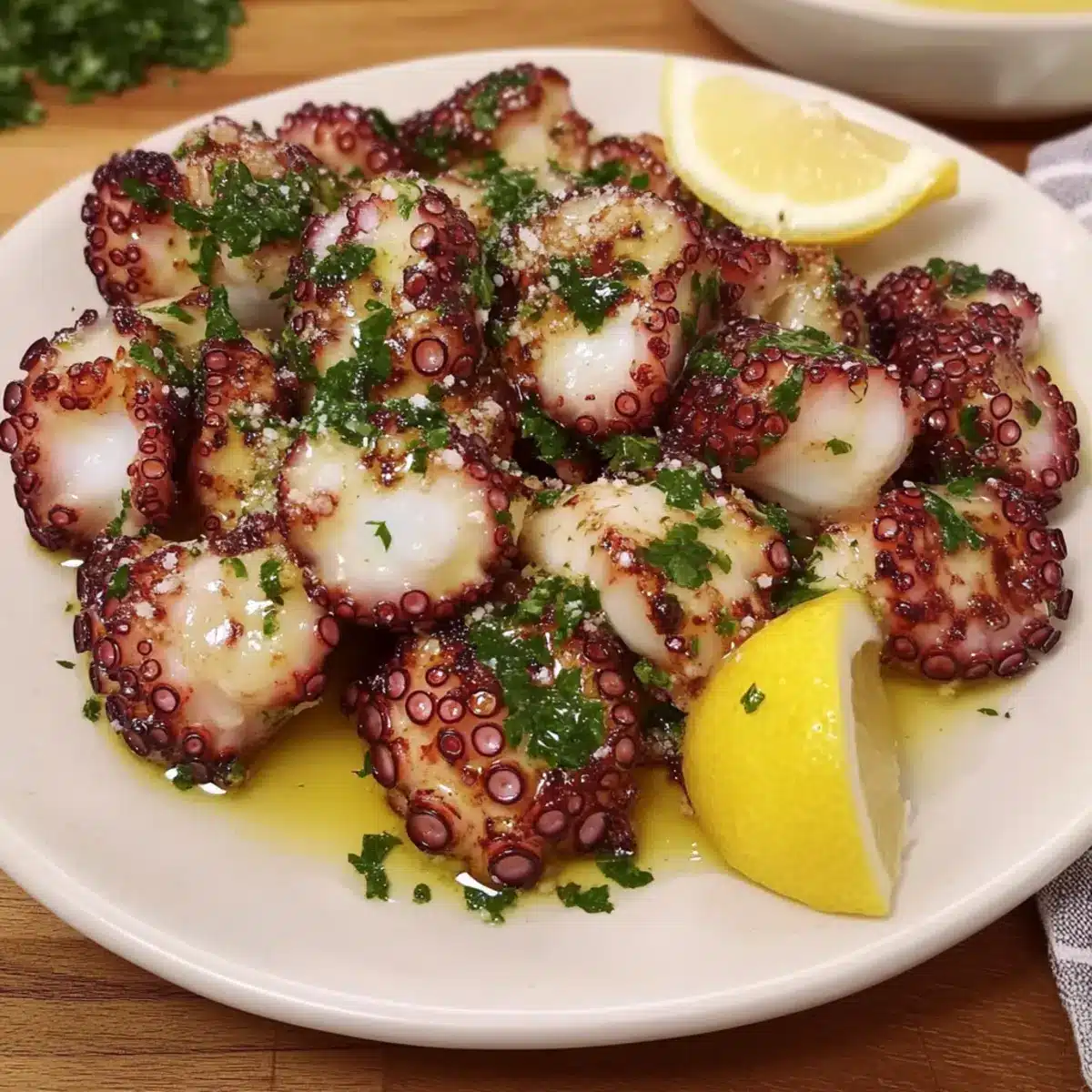
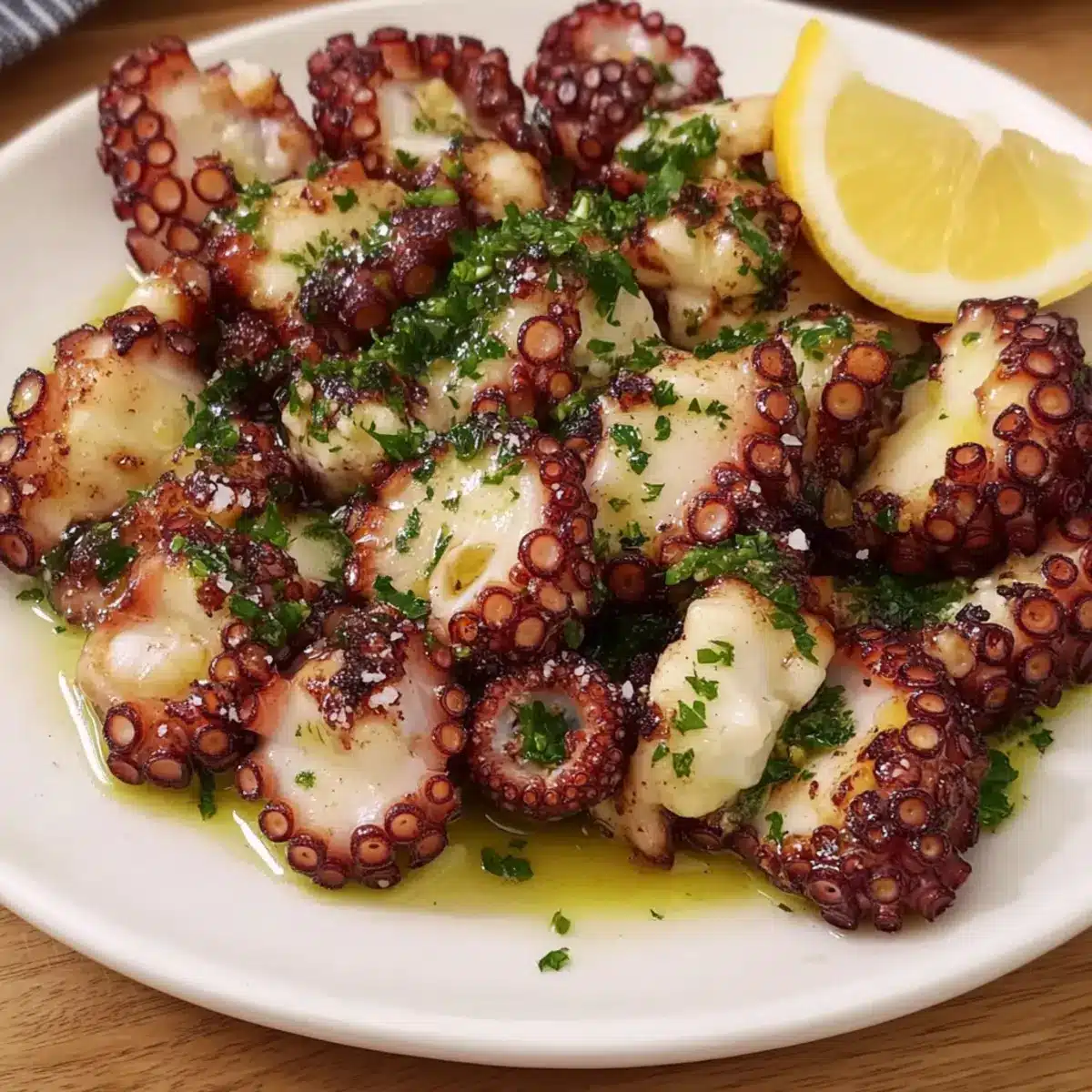
Once cooked, turn off the heat and let the octopus rest in the hot poaching liquid for an additional 10 minutes. This resting period allows the flavors to meld and the octopus to become even juicier. During this time, prepare for serving by slicing the tentacles into bite-sized pieces. Drizzle with quality olive oil, a splash of lemon juice, and a sprinkle of flaky salt to enhance the flavor and presentation. For an extra touch, consider a brief sear on a hot grill or pan for a delectable charred finish.
Storage Tips for Boiled Octopus
Fridge: Store boiled octopus in an airtight container in the refrigerator for up to 3 days. This helps maintain its tender texture and enhances flavor as it chills.
Freezer: For longer storage, wrap the boiled octopus tightly in plastic wrap, then place it in a freezer bag. It can be frozen for up to 3 months without losing its delicious taste.
Thawing: When you’re ready to enjoy it again, thaw the octopus in the fridge overnight. Before serving, it can be gently reheated by simmering in water or a light broth for added moisture.
Reheating: If reheating, do so on low heat to prevent it from becoming rubbery. Drizzling with olive oil or adding a squeeze of lemon juice can help bring back its delightful flavor.
What to Serve with Easy and Tender Boiled Octopus
Elevate your dining experience with delightful accompaniments that enhance the tender, ocean-kissed flavor of your dish.
-
Garlic Butter Linguine: The softness of pasta coated in rich, buttery garlic complements the tender octopus beautifully, providing a satisfying contrast.
-
Mediterranean Couscous Salad: Bursting with fresh veggies, herbs, and a zesty dressing, this salad adds brightness and texture to your plate.
-
Roasted Potatoes with Herbs: Crispy potatoes seasoned with rosemary and thyme bring a cozy, rustic feel, perfect for soaking up the octopus’s juices.
-
Grilled Asparagus: Charred and tender, the smokiness of grilled asparagus offers a vibrant crunch that harmonizes with the delicate octopus’s flavor.
-
Chickpea Hummus: Creamy and nutty, this classic dip pairs splendidly with crusty bread, creating a delicious contrast to the seafood.
-
Sparkling White Wine: The crisp acidity of sparkling wine refreshes the palate, enhancing the briny flavors of the boiled octopus for a satisfying dining experience.
-
Lemon and Capers Sauce: A drizzle of zesty lemon-caper sauce over the octopus boosts its brightness, adding a tangy flair that excites the taste buds.
-
Fresh Arugula Salad: With its peppery taste, this simple salad adds a lively bite and balances the dish without overwhelming its subtle seafood sweetness.
-
Tzatziki Sauce: Creamy and refreshing, this yogurt-based cucumber dip offers a cool contrast to the warm octopus, enhancing the Mediterranean experience.
Expert Tips for Boiled Octopus
-
Clean Thoroughly: Always ensure your octopus is fully cleaned, removing the beak, eyes, and ink sac for the best flavor and texture.
-
Steady Simmer: Maintain a gentle simmer during cooking instead of a rolling boil. This helps achieve the optimal tenderness of the boiled octopus.
-
Testing for Doneness: Check for doneness by piercing the thickest part with a knife; it should be tender but not mushy. Avoid overcooking for the best results.
-
Resting is Key: Allow the boiled octopus to rest in the hot liquid for 10 minutes post-cooking. This helps retain its juiciness and flavor.
-
Flavor Enhancements: For a delightful finish, drizzle with quality olive oil and fresh lemon juice just before serving to elevate the taste of your boiled octopus.
Make Ahead Options
These Easy and Tender Boiled Octopus are perfect for meal prep enthusiasts! You can clean and prepare the octopus up to 24 hours in advance, storing it in the refrigerator (covered) until you’re ready to cook. Additionally, you can also prepare the poaching liquid ahead of time; mix the water, onion, garlic, bay leaves, peppercorns, vinegar (or wine), and salt, then refrigerate it for up to 3 days. When you’re ready to enjoy this delicious dish, simply warm the poaching liquid, bring it to a simmer, and follow the cooking instructions. This way, you’ll save time on a busy weeknight while still enjoying tender, flavorful octopus that’s just as delightful!
Boiled Octopus Variations & Substitutions
Explore delectable ways to customize your boiled octopus and make this dish your own!
- Smoky Flavor: Add smoked paprika during cooking for a burst of rich flavor reminiscent of Spanish cuisine.
- Citrus Twist: Sprinkle with fresh orange zest before serving for a refreshing lift that complements the octopus beautifully.
- Spicy Kick: Include red pepper flakes to the poaching liquid if you love a little heat; just a pinch can elevate the overall experience.
- Herb Infusion: Substitute fresh thyme or oregano instead of bay leaves for a different aromatic profile that brightens up the octopus.
- Umami Boost: Add a splash of soy sauce to the boiling liquid for an unexpected umami punch that pairs well with seafood.
- Textural Variation: After boiling, grill or char the octopus for a smoky, crispy texture that contrasts with the tender meat.
- Mediterranean Salad: Toss the boiled octopus with cherry tomatoes, olives, and arugula for a refreshing Mediterranean salad that bursts with flavors.
Feel free to experiment with these variations to create your signature boiled octopus. For additional flavor ideas, check out how to incorporate it into a light seafood salad or how to grill octopus for an added twist!
Boiled Octopus Recipe FAQs
What should I look for when selecting octopus?
Absolutely! When selecting octopus, look for firm, glossy skin free of dark spots. The best octopus should smell fresh and briny, reminiscent of the ocean. Opt for specimens that are plump and feel heavy for their size. If purchasing frozen, ensure they are properly sealed without any freezer burn.
How can I store leftover boiled octopus?
You can refrigerate leftover boiled octopus in an airtight container for up to 3 days. This not only preserves its tender texture but allows flavors to meld together nicely, enhancing the taste. For longer storage, wrap it tightly in plastic wrap and place it in a freezer bag. It can be frozen for up to 3 months.
What are the steps to freeze boiled octopus properly?
The more the merrier! Begin by allowing the boiled octopus to cool completely to room temperature. Then, wrap it tightly in plastic wrap to prevent freezer burn. Place the wrapped octopus in a freezer bag, removing as much air as possible. It’s best to label the bag with the date. When ready to use, thaw overnight in the refrigerator and, if desired, gently reheat in water or broth to maintain moisture.
Why did my boiled octopus turn out tough?
Very! A tough texture is often due to cooking it at too high a temperature or for too long. It’s crucial to maintain a gentle simmer during cooking. You should also test for doneness by inserting a knife into the thickest part; it should slide in easily but not feel mushy. If you overcook, no worries, just remember next time to monitor it closely!
Is boiled octopus safe for everyone to eat?
Absolutely! While boiled octopus is generally safe, be cautious if you or your guests have shellfish allergies, as some individuals may experience cross-reactivity. As with any dish, it’s always best to consult with those who have dietary restrictions.
How can I enhance the flavors of my boiled octopus?
You can elevate the taste of your boiled octopus by drizzling it with high-quality olive oil, squeezing fresh lemon juice over the top, and sprinkling a bit of flaky sea salt before serving. Additionally, pairing it with smoky paprika or fresh herbs can really enhance the Mediterranean flavor profile!
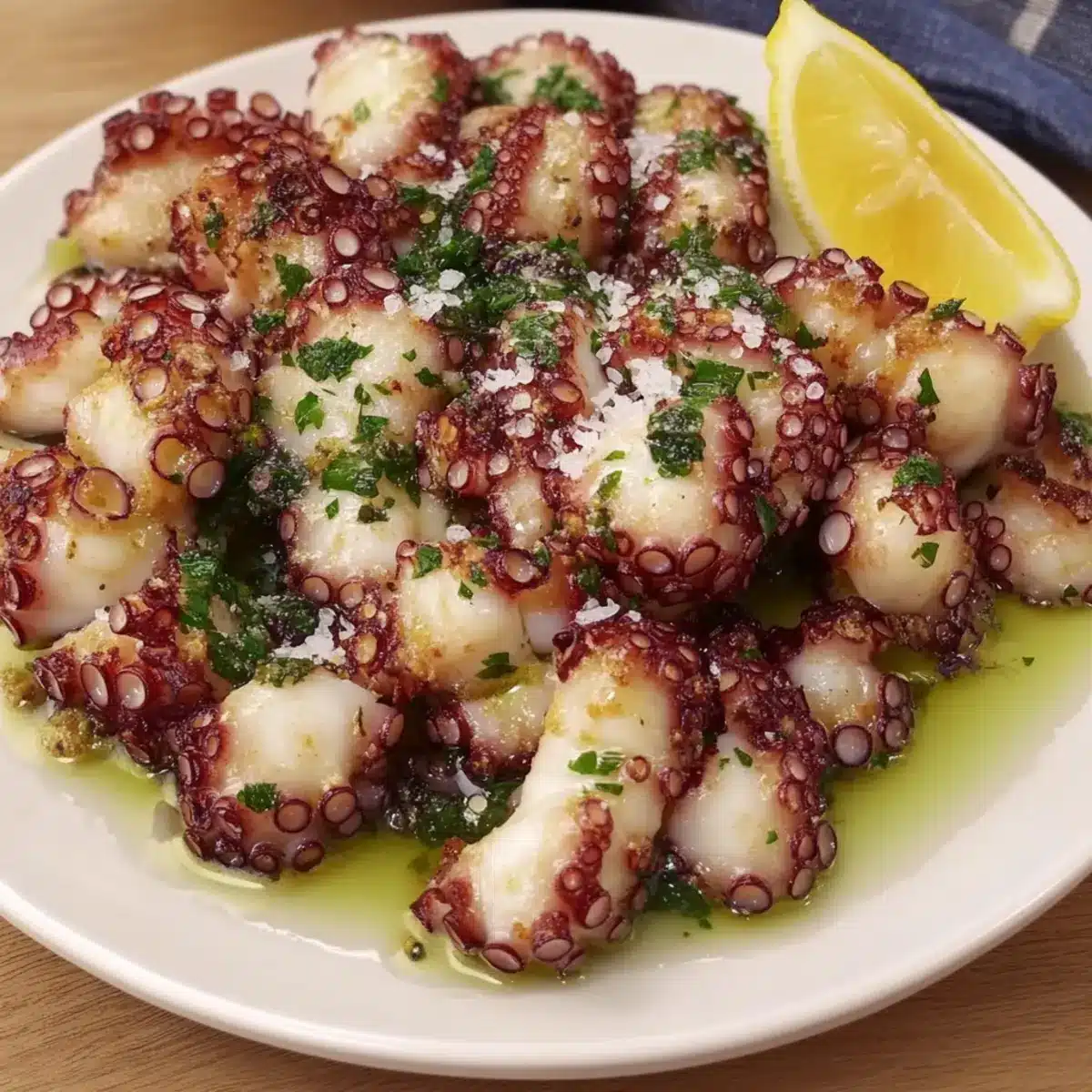
Tender Boiled Octopus Recipe for Mediterranean Bliss
Ingredients
Equipment
Method
- Rinse the cleaned octopus under cold running water and pat dry.
- In a large stockpot, combine 8 cups of water with a halved onion, smashed garlic cloves, bay leaves, whole peppercorns, vinegar (or wine), and a generous pinch of salt. Stir to combine.
- Bring to a gentle boil, then reduce to a low simmer. Dip the octopus into the liquid three times, then lower fully into the pot.
- Cover loosely and let simmer for 45 to 60 minutes, checking for doneness.
- Turn off the heat and let the octopus rest in the poaching liquid for 10 minutes. Slice into bite-sized pieces, drizzle with olive oil and lemon juice.
Leave a Reply