
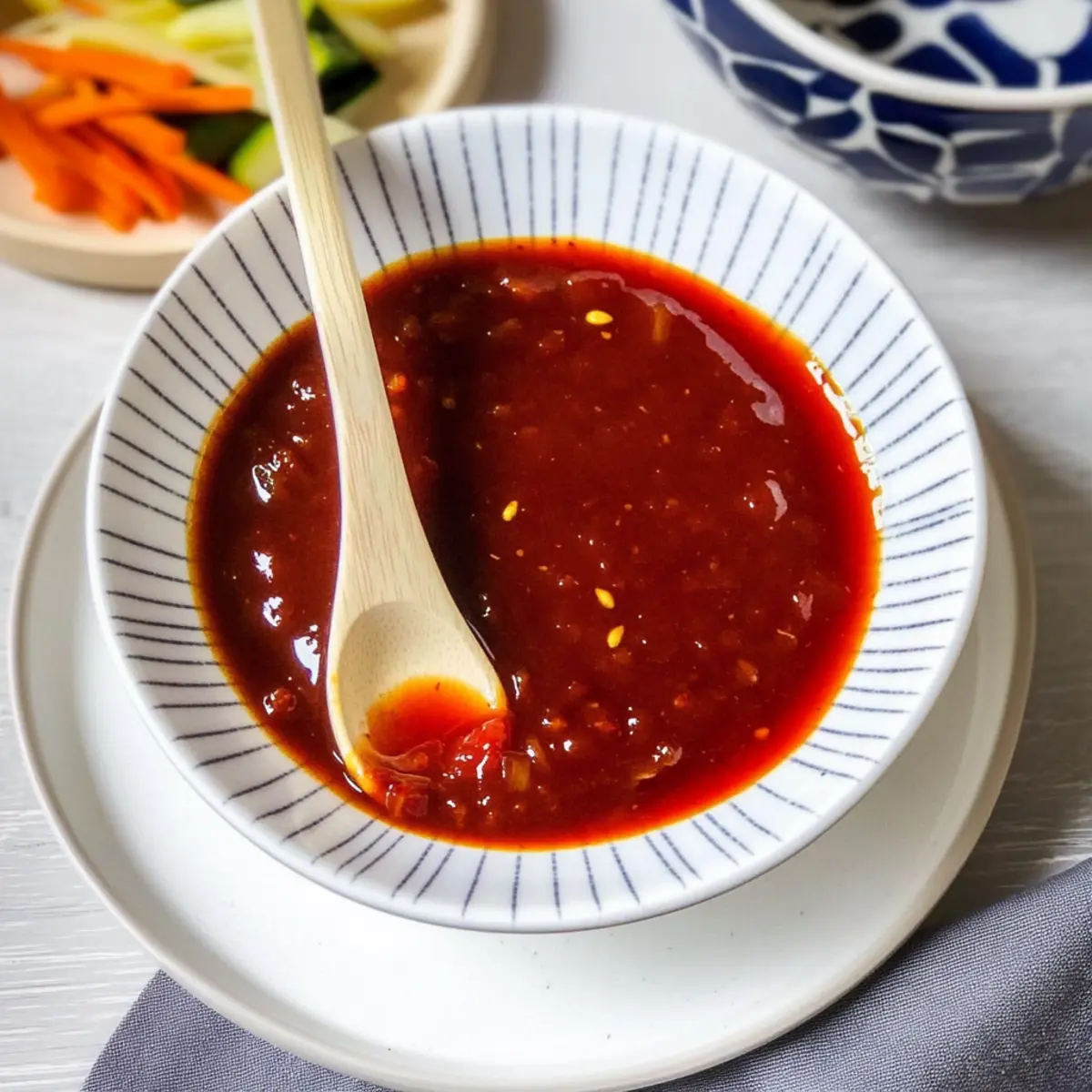
The enticing aroma of toasty sesame oil and spicy gochujang wafts through my kitchen as I whip up this Easy Authentic Bibimbap Sauce. In just five minutes and with only six simple pantry staples, I transform this vibrant condiment into the perfect companion for any rice bowl, elevating it to a culinary experience that bursts with Asian flair. This bibimbap sauce not only allows you to customize the spice level to suit your palate, but it also enhances a quick, homemade meal that keeps fast food at bay. Whether you’re drizzling it over a colorful array of sautéed vegetables or using it as a bold dip for Korean pancakes, the versatility of this sauce will keep your taste buds craving more. Are you ready to bring a burst of flavor to your table?
Why is Bibimbap Sauce a Must-Try?
Quick and Easy: This sauce is ready in just five minutes, making it the perfect solution for busy weeknight dinners or last-minute gatherings.
Versatile Flavors: Whether you’re looking for a spicy kick or a milder taste, you can easily adjust the heat level by tuning the gochujang to fit your palette.
Culinary Adventure: This bibimbap sauce elevates ordinary meals into extraordinary ones, seamlessly complementing rice, vegetables, or even as a dip for delectable Korean pancakes and dumplings.
Fresh Ingredients: With just six pantry staples, you can create an authentic Korean condiment that’s both refreshing and satisfying. For extra flavor, try incorporating minced ginger or lime juice!
Health Benefits: Packed with healthy fats from sesame oil and a balance of natural sugars, this sauce supports a wholesome dining experience while keeping fast food at bay. Plus, make it ahead of time to intensify the flavors! The journey into homemade delights begins here.
Bibimbap Sauce Ingredients
For the Sauce
• Gochujang – A Korean red chili paste that provides heat and depth; adjust the amount to control spiciness.
• Garlic (minced) – Adds pungency and aromatic flavor; freshly minced garlic is preferred for best results.
• Toasted sesame oil – Contributes a nutty flavor and rich aroma, critical for authentic taste.
• Honey – Balances the heat with sweetness; can be substituted with agave nectar for a vegan option.
• Sugar – Enhances sweetness; may be reduced or omitted based on taste preferences.
• Rice vinegar – Adds acidity to balance flavors; substitution with apple cider vinegar is possible, though flavor may vary slightly.
• Salt (optional) – Enhances overall flavor; use if needed according to taste preferences.
Step‑by‑Step Instructions for Bibimbap Sauce
Step 1: Prepare the Base
In a medium-sized mixing bowl, measure out 1/4 cup of gochujang, the essential base of your bibimbap sauce. This Korean red chili paste will provide the signature heat, so take a moment to assess its spiciness level based on your preference. With a spatula, gently smooth out any clumps to ensure an even consistency for the sauce.
Step 2: Add Aromatics
Next, incorporate 2 teaspoons of freshly minced garlic into the bowl with the gochujang. The aromatic nature of garlic will enhance the overall flavor profile. Following this, pour in 1 tablespoon of toasted sesame oil; its nutty aroma should fill the air as you add it. Stir the mixture lightly to blend the inviting scents together, ensuring a delightful base for your bibimbap sauce.
Step 3: Sweeten the Sauce
To balance the heat and richness, add 2 tablespoons of honey to the mixture. If you’re aiming for a vegan option, you can substitute this with agave nectar. Then, sprinkle in 1 tablespoon of sugar to further enhance the sweetness, creating an inviting contrast to the gochujang’s spiciness. Mix vigorously until the ingredients blend smoothly, keeping an eye out for a cohesive consistency.
Step 4: Add Acidity
Introduce 1.5 tablespoons of rice vinegar to the bowl, providing a necessary acidity that will brighten up your bibimbap sauce. If you’re out of rice vinegar, feel free to use apple cider vinegar; the flavor may vary slightly but will still work well. Mix well until all the components are harmoniously integrated, creating a vibrant sauce that sings with flavor.
Step 5: Season to Taste
If desired, sprinkle in 1/4 teaspoon of salt, enhancing the sauce’s overall flavor profile. This step is optional, but adjusting salt can elevate the taste based on your personal preferences. Stir the sauce once more, ensuring everything is well combined and tasting it to make any final adjustments as needed.
Step 6: Final Stir and Serve
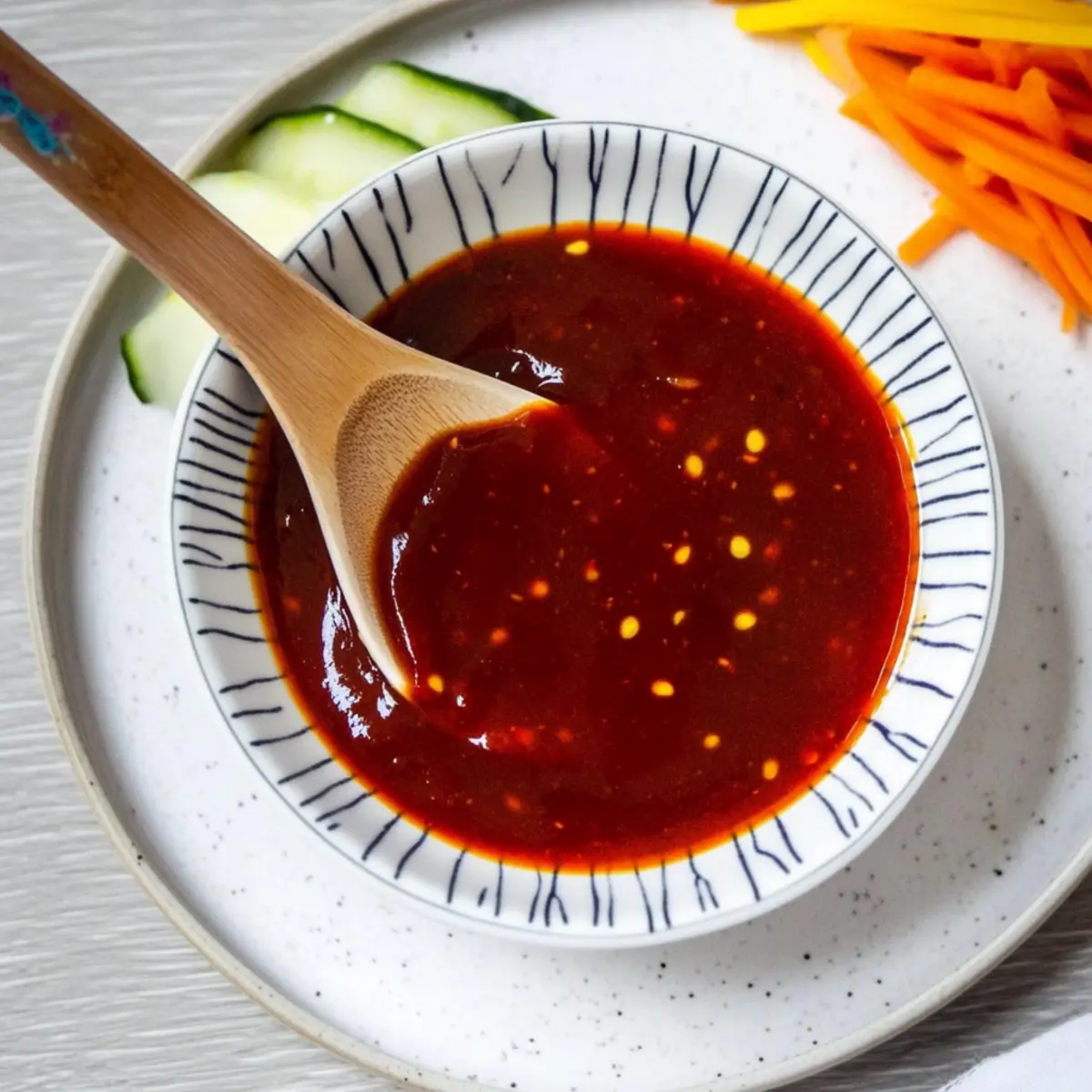
With the flavors now melded together, give the bibimbap sauce a final quick stir, making sure the texture appears smooth and inviting. It’s ready to be served immediately, or you can store it in a glass container for later use. This versatile sauce not only pairs beautifully with bibimbap but also works well as a delightful dip.
Expert Tips for Bibimbap Sauce
• Control Spiciness: Start with less gochujang if you’re sensitive to heat, and gradually increase to find your perfect balance.
• Fresh Garlic: Always use freshly minced garlic for the best flavor; pre-minced versions can lack the desired aromatic punch.
• Store Properly: Use a glass container for storing leftover bibimbap sauce to prevent staining from the gochujang, and refrigerate for up to two weeks.
• Add Complexity: Experiment by incorporating lime juice or grated ginger for an additional layer of flavor that elevates the sauce experience.
• Serve Creatively: This sauce isn’t just for bibimbap; drizzle it over roasted meats or use it as a bold dip for fresh veggies and dumplings!
• Taste as You Go: Adjust the sweetness and acidity to your liking—don’t hesitate to tweak the sugar or vinegar to perfectly suit your preferences.
How to Store and Freeze Bibimbap Sauce
Refrigerator: Store your bibimbap sauce in an airtight glass container for up to two weeks. This allows the flavors to deepen and marry beautifully.
Freezer: If you want to make a larger batch, freeze the sauce in ice cube trays. Once frozen, transfer to a zip-lock bag and use within six months for the best flavor.
Reheating: To reheat, simply let it thaw in the fridge overnight or microwave in short bursts until warm, stirring well to restore consistency.
Room Temperature: It’s best to avoid leaving the bibimbap sauce at room temperature for more than two hours to maintain freshness and flavor.
Bibimbap Sauce Variations & Substitutions
Feel free to get creative with your bibimbap sauce! With these simple adjustments, you can customize the flavors to suit your taste.
-
Vegan Option: Swap honey for agave nectar to keep it entirely plant-based without losing sweetness. This little change ensures everyone can enjoy the deliciousness.
-
Spice Level: For a milder sauce, reduce the gochujang amount to 2 tablespoons; you can always add more later if you like it spicier. Play around with your heat preference and discover your ideal balance!
-
Thicker Sauce: If you like your bibimbap sauce thicker, mix in a bit of water, a teaspoon at a time, until you reach your desired consistency. It’s all about personal preference!
-
Additional Flavor: Consider adding a teaspoon of freshly grated ginger or a splash of lime juice to elevate the taste. The zingy notes can beautifully enhance the overall flavor profile.
-
Swap for Sweetness: If you’re looking to cut down on sugar, simply omit the added sugar entirely or use a sugar substitute like stevia to maintain the sweetness without the calories.
-
Different Vinegar: In place of rice vinegar, apple cider vinegar works just as well. Though the taste will differ slightly, the tartness will still complement the sauce nicely.
-
Umami Twist: Stir in a teaspoon of soy sauce or tamari for an added umami kick that harmonizes perfectly with the other ingredients. This gives more depth to your bibimbap sauce!
-
Extra Crunch: Add a sprinkle of toasted sesame seeds on top when serving for a delightful crunch and enhanced nutty flavor. It’s a simple touch that takes your dish up a notch!
With these variations, you can create the perfect bibimbap sauce that captures your personal style and palate. Don’t forget to also check out the mouthwatering Baked Lobster Tails for a delicious alternative to try with your sauce!
What to Serve with Easy Authentic Bibimbap Sauce?
Imagine the delightful harmony of flavors and textures as you create a complete meal to delight your senses.
-
Steamed Rice: This fluffy, neutral base perfectly absorbs the vibrant flavors of the bibimbap sauce, offering a satisfying bite with each mouthful.
-
Sautéed Spinach: Lightly seasoned and quickly sautéed, spinach adds a fresh, slightly earthy note that balances the sauce’s spiciness beautifully.
-
Eggs (Fried or Poached): A sunny-side-up egg adds richness and creaminess, melding perfectly with the bibimbap sauce for a delicious combination of flavors.
-
Grilled Tofu: Crisp on the outside and tender inside, the savory taste of grilled tofu complements the sauce’s boldness, lending a satisfying protein element to your dish.
-
Korean Pancakes (Jeon): These savory pancakes act as a delightful dipping vessel for your sauce, featuring crispy edges and a soft center that pairs wonderfully with the bold flavors.
-
Kimchi: A traditional spicy side that enhances the meal with its crunchy texture and fermented goodness, kimchi offers a tangy contrast to the bibimbap sauce.
-
Pickled Radishes: Their crisp, slightly sweet crunch adds a refreshing sharpness, brightening up each bite and counterbalancing the sauce’s depth.
-
Cold Noodles: Chilled noodles drizzled with some bibimbap sauce create a delightful contrast in temperature and texture, offering a light yet flavorful meal.
-
Fruit Salad: A light fruit salad with sweet and tart notes refreshes the palate, providing a delightful balance after indulging in the bold flavors of the meal.
-
Iced Green Tea: This refreshing drink cleanses your palate between bites and complements the meal with its subtle flavor, offering a soothing contrast to the spice.
Make Ahead Options
These Easy Authentic Bibimbap Sauce preparations are perfect for busy home cooks looking to save time! You can make the bibimbap sauce up to 5 days in advance, allowing the flavors to deepen and meld beautifully while refrigerated. Simply prepare the sauce as directed, then transfer it to an airtight glass container to avoid staining and keep it fresh. When you’re ready to enjoy it, just give the sauce a quick stir before serving, as the ingredients may settle a little. This makes it not only a convenient option for meal prep but ensures you’ll have a vibrant, flavorful enhancement for your rice bowls ready to go when you are!
Bibimbap Sauce Recipe FAQs
What kind of gochujang should I use?
For the best flavor, opt for high-quality gochujang that’s made with red chili powder, glutinous rice, and fermented soybeans. Korean brands often provide a rich depth of flavor. If you have a heat sensitivity, consider starting with a mild variety and adjust according to your spice tolerance.
How should I store my bibimbap sauce?
Store your bibimbap sauce in an airtight glass container in the refrigerator for up to two weeks. This storage method not only prevents staining from gochujang but also allows the flavors to meld and enhance over time. Just make sure to give it a good stir before serving!
Can I freeze bibimbap sauce?
Absolutely! To freeze, pour the sauce into ice cube trays, ensuring each compartment is filled evenly. Once frozen, transfer the cubes to a zip-lock bag, and store it in the freezer for up to six months. This way, you can easily grab a cube whenever you need a burst of flavor!
What if my sauce is too spicy?
If you find your bibimbap sauce too spicy, you can balance the heat by adding a bit more honey or sugar to tame the spice. Alternatively, mix in some vinegar, as its acidity can help cut through the heat. If you need a quick fix, adding a splash of water can also dilute the spiciness slightly.
Can I use substitutes for any of the ingredients?
Definitely! If you’re looking for a vegan option, substitute honey with agave nectar. You can also use apple cider vinegar instead of rice vinegar. If gochujang is unavailable, try mixing red chili powder with a bit of soy sauce and a sweetener for a homemade alternative, though the flavor will differ slightly.
Is this bibimbap sauce safe for allergies?
Always check the labels of your ingredients to ensure there are no allergens. This recipe is inherently gluten-free if you use gluten-free gochujang and soy sauce. Additionally, if you’re concerned about garlic or honey with specific dietary restrictions, feel free to omit them or substitute with alternative seasonings!
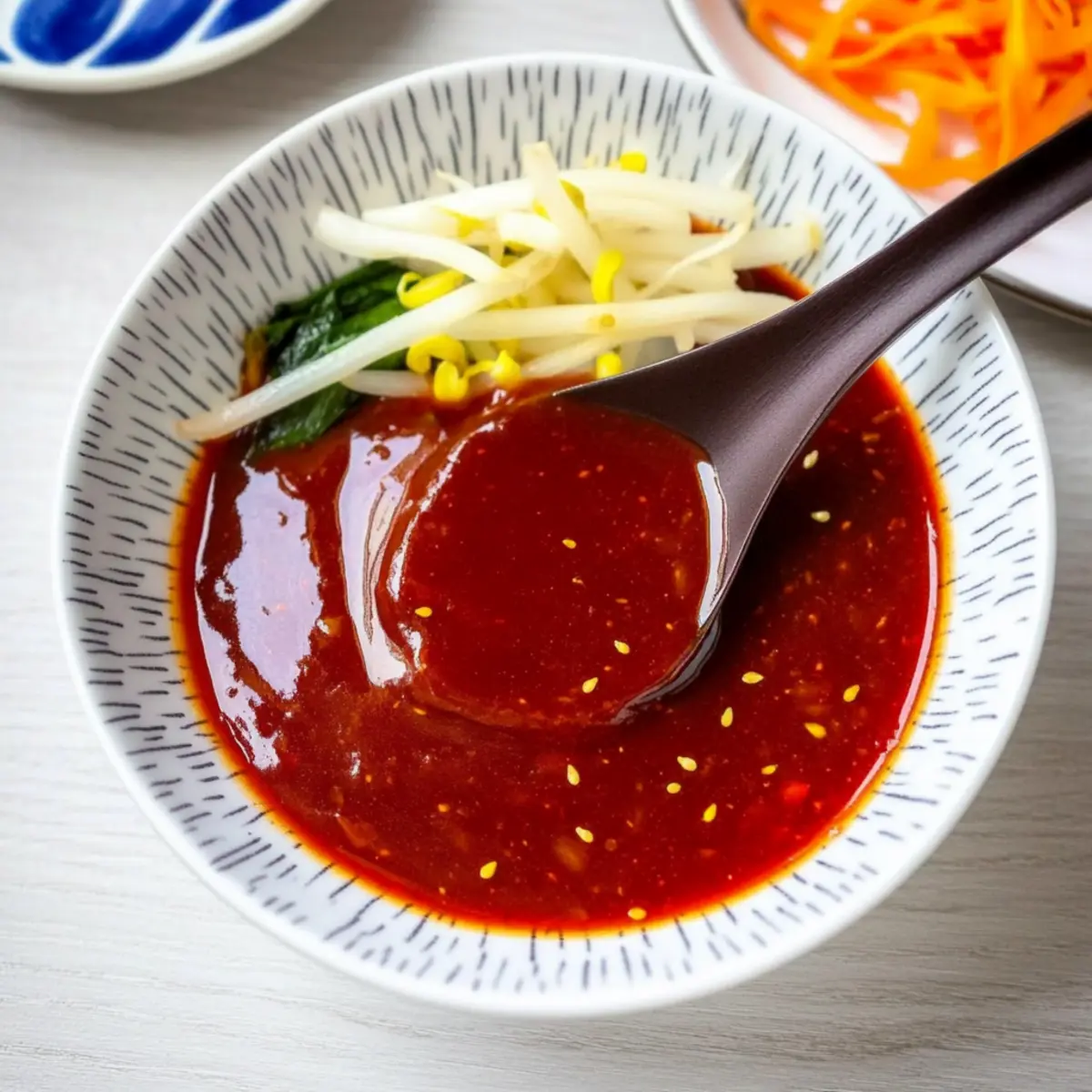
Zesty Bibimbap Sauce Ready in Just 5 Minutes
Ingredients
Equipment
Method
- In a medium-sized mixing bowl, measure out 1/4 cup of gochujang, smoothing out any clumps.
- Incorporate 2 teaspoons of freshly minced garlic and stir in 1 tablespoon of toasted sesame oil.
- Add 2 tablespoons of honey and 1 tablespoon of sugar, mixing vigorously until smooth.
- Introduce 1.5 tablespoons of rice vinegar, mixing well until all components are integrated.
- If desired, sprinkle in 1/4 teaspoon of salt and stir to combine.
- Give the sauce a final stir and serve immediately or store in a glass container for later use.
Leave a Reply